Boundary Critique: A Political Theory of Commune
Since Marx’s interpretation of the Paris Commune in The Civil War in France, the term commune has been central to democratic, socialist philosophy. It has gestured toward revolutionary democratic politics that seeks to break the conceptual boundaries between political, economic, and familial spheres in capitalist society. The commune aspiration was especially influential for the early Soviet politicians who translated the socialist ideal into the political program of family kommunalizatsiya: politicizing and communalizing individual family work by creating the new infrastructure of public childcare centers, canteens, schools, and libraries.
Capitalist society, as criticized by socialist, workers,’ and women’s movements in the nineteenth- and twentieth-centuries, structurally blocked politicization of the spheres of family and economics. People lacked the democratic power to make collective decisions about quintessential matters, including decisions about how many hours to work, in what housing to live, or how to raise children. The socialist agitators and organizations advocated for expansive democracy that would subordinate these naturalized questions under popular power.
My dissertation retrieves their constructive political vision of democratic governance or, in other words, the idea of commune. Against contemporary interpretations of the commune as a non-political community, it argues that the historic democratic theory of commune suggests a political aspiration toward the democratic communalization of the capitalist economy.
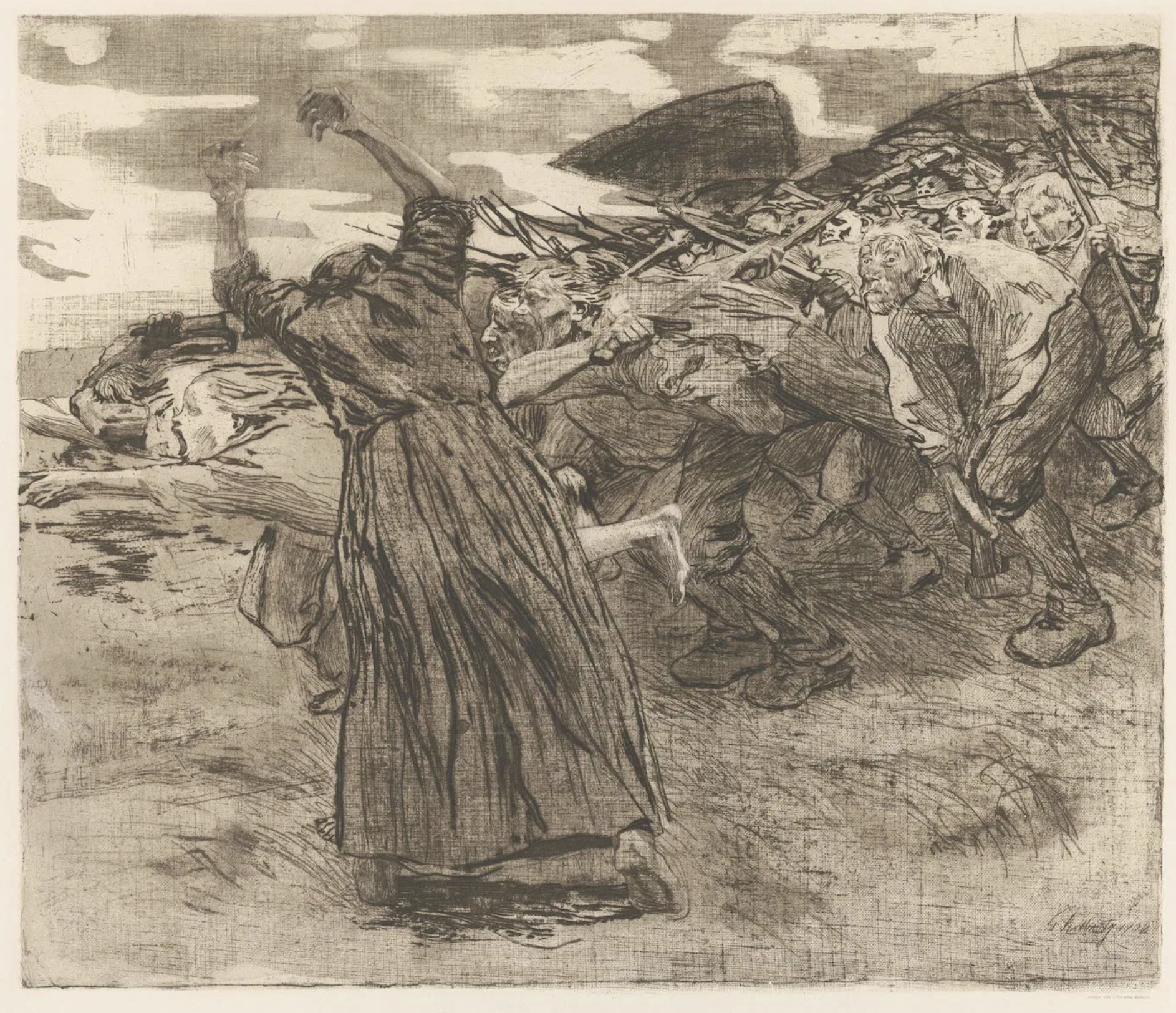
Käthe Kollwitz, Peasants War, 1902